

How to Choose the Best Outdoor Heaters For Patio Electric
If you're looking to heat a large outdoor space or just a small patio, there are many options to choose from. Take into consideration your particular needs when choosing the right patio heater.
Electric patio heaters are easy to install and do not require special connections. They are also convenient since they do not emit carbon monoxide.
Pellet heaters
A pellet heater is a great option for any outdoor space, whether you want to warm up your patio in winter or host a private backyard barbecue. This type of heater uses wood pellets as a fuel source, which is more cost-effective and environmentally friendly than propane. The heater comes in various sizes to meet your requirements. The smaller models are ideal for smaller spaces, whereas the larger models can be used to heat large decks, or an outdoor kitchen.
When choosing a patio heater with pellets There are a lot of aspects to take into consideration, including the power, the heating capacity, and any safety features. For example, a unit with a digital thermometer will automatically turn off when the temperature gets too high, so it doesn't pose any risk to you or your guests. Other security features include a tilt switch which shuts off the heater if it is tipped over. In addition, many models come with an integrated carbon monoxide detector that warns you of any risk.
The size of your patio will also determine how much heat is required. Although most models can be used to cover a large space, it's better to look at the energy output in BTUs to make sure the heater you choose for your patio is powerful enough to cover your space. It is also important to consider the layout of your landscaping. If your yard has lots of plants and trees, a directional model like the Even Embers Wood Pellet Heater could be more suitable for you than a wall-mounted option.
Propane and natural gas heaters require adequate ventilation to function safely, and should only be used in well-ventilated spaces. Electric heaters emit no pollutants and are safe to use in enclosed spaces.
You should also think about your budget when purchasing pellet patio heaters. These heaters are cheaper than propane or natural gas heaters but may not produce as much heat. Certain models might include additional switches and accessories which can raise the cost. In the end, you must be aware of your needs for use and whether you intend to take your heater on trips with you.
Propane heaters
Propane patio heaters emit radiant heat that warms nearby objects in a similar way as the sun. This type of heating is perfect for outdoor dining areas where diners can enjoy the warm weather without having to go inside.
Propane heaters are also more powerful than electric heaters which is beneficial when you have to heat a large space. Select a model that has the correct amount of BTUs to ensure that your space is heated effectively. A higher number will provide more power for heating, but the unit that has too many BTUs can overwhelm the small space of your patio.
You'll need to change the fuel source of propane heaters more often than you would for electric models. You will also need to keep the cylinders stored in a safe location safe from damage and manipulation.
These units can be put up on the ceiling or wall. They are typically freestanding and look similar to umbrellas. These options take up less space and offer more versatility, but they require professional installation into the existing gas line.
Go to the site of the manufacturer for safety and other recommendations prior to purchasing propane heaters. The site usually contains details about proper use and maintenance, and the heater's rating output. Some manufacturers offer videos that demonstrate how to install and use the device safely.
A tip-over automatic shut-off feature is another feature that is extremely useful. This function detects when the device tilts or isn't on a flat surface, and turns off the heating elements. While this adds an extra layer of security but it's still a good idea to remain close to the heater while it's operating in the event that it falls over.
Select a device with an ETL (international certification agency) listing that is suitable for indoor and outdoor usage. This designation will ensure that the device is safe to operate in damp environments. electricpatio heater will also be branded if it has an overheating protection device which will shut off the heater if the heating element becomes too hot.
Electric heaters
Electric patio heaters are a fantastic alternative to heaters that rely on natural gas or propane. They are more efficient in energy use and don't require replenished.
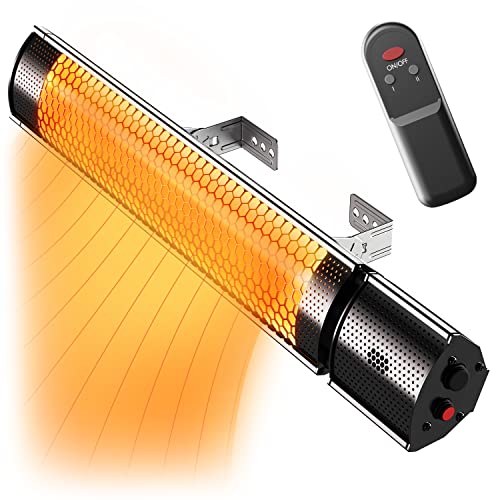
However, they may have some disadvantages. Certain models are less durable and have lower heat output. To determine the best model for your outdoor space, think about the area of the area as well as the climate in which you live. Examine the BTU rating of the unit to ensure it can provide sufficient heat for your requirements.
When choosing an electric patio heater, look for one that has a remote and several different heating modes. This lets you manage the temperature as well as the amount of heat it produces, and you can set a timer that turns it on and off automatically. Also, look for a safety feature that shuts off the heat if it becomes too hot.
Certain electric patio heaters have a tip-over automatic shut-off, which will turn the unit off if it falls. This helps to reduce the risk of fire. Certain models have wheels at the base, which permit you to move them around and adjust their position as needed. Whatever patio heater you pick ensure that you read through the user's manual for safety tips and directions.
The source of power for an electric patio heater influences its energy output and durability. A propane heater will last longer and generate more heat than an electric model. However, it may be more costly to operate, especially when your outdoor space is vast.
You should also choose furniture that is easy to maintain and complements your decor. Find outdoor furniture made of materials that are able to endure the elements, such as all-weather metal and Wicker. You can also add decorative elements such as a fountain or planters, to your patio or deck. Consider adding a fire pit as well, for an aesthetic and relaxing focal feature that also serves as a additional source of heat.
Infrared heaters
Infrared heaters emit infrared light with a quartz component. This is the same wavelength sun uses to warm our planet. This technology is especially useful in outdoor areas, where wind can carry heat from a propane or pellet burner into the air. However, infrared heaters can be effective indoors, especially in areas with a lot of draft, such as warehouses, churches and workshops where convection heating is inefficient.
Compared to other types of heaters, these models are more efficient in energy use. They do not lose heat due to combustion. This means that more of the energy produced is actually heat for your patio. They also do not require a large storage tank, making them more portable. However, the power they produce is lower than propane or gas grills and can only warm a small to moderate-sized patio.
Pellet patio heaters utilize wood pellets compressed for fuel and are an excellent choice for those looking to reduce their carbon footprint. The towers emit up to 72,000 BTUs, and the hopper at the back stores 25 pounds of pellets. These types of heaters tend to be less expensive and more consistent in cost than their propane counterparts, but you'll need to make sure you have an energy source that is reliable available to keep your patio warm.
These heaters are also more flexible than their propane counterparts. They can be used inside or out, and be used as decorative accents or table lamps. Depending on the model you choose you'll be able control the size and direction of the infrared output with an easy remote.
Infrared heaters are also renowned for their rapid heating time. They can make you and your guests comfortable in just a few seconds.
This patio heater is part of the Bromic heating line, which is known for its reliability and durability. It's a great choice for those who want an aesthetic alternative to traditional parasol (or mushroom) heaters. It has a higher energy output, and can be positioned in different directions. This makes it a better option than parasol heaters if you need an exact distribution of heat.